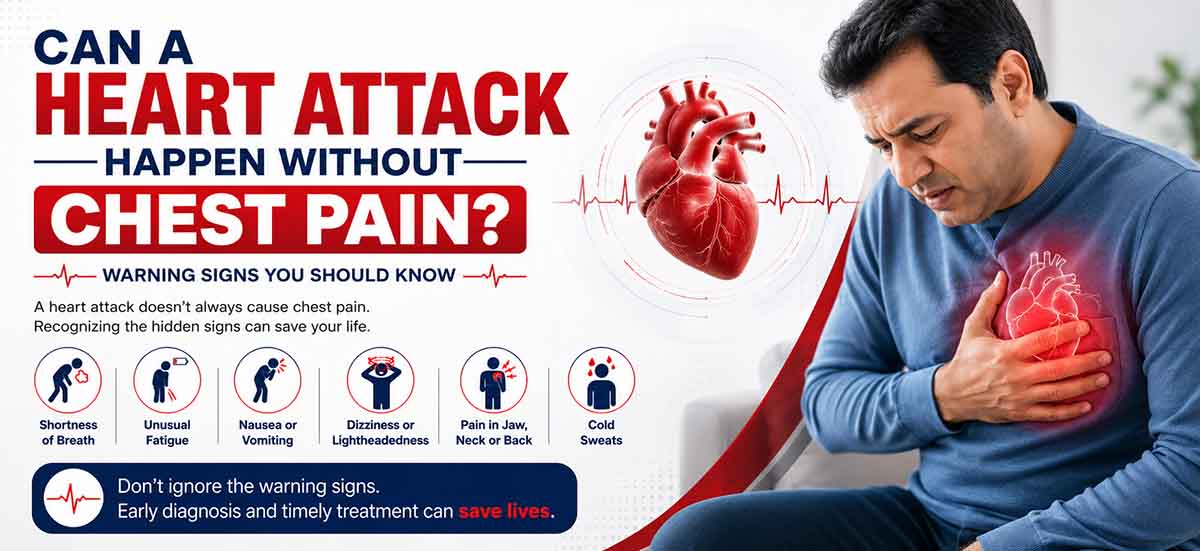
When most people think of a heart attack, they imagine sudden, severe chest pain. While chest discomfort is one of the most common symptoms, a heart attack can happen without chest pain. In some individuals, the warning signs may be mild, unusual, or mistaken for other health problems, delaying life-saving treatment.
Recognizing these less obvious symptoms is important because early medical attention can reduce heart damage and improve recovery.
This article explains how a heart attack may occur without chest pain, who is more likely to experience it, and when you should seek emergency medical care.
Yes. A heart attack without chest pain is medically recognized and is sometimes referred to as a silent heart attack or an atypical heart attack presentation.
Instead of intense chest pain, some people experience symptoms that may seem unrelated to the heart. Because these symptoms are subtle, they are often ignored or mistaken for indigestion, fatigue, or muscle pain.
Although the symptoms may be different, the heart muscle is still being damaged due to reduced blood flow, making prompt diagnosis essential.
A person may experience one or more of the following:
Symptoms can vary from person to person. Some may develop gradually over several hours, while others appear suddenly.
Although anyone can experience atypical symptoms, it is more common in:
These groups should be especially aware of unusual symptoms and avoid delaying medical evaluation.
A heart attack occurs when blood flow through one of the coronary arteries becomes blocked.
Some people may not experience significant chest pain because:
Even without chest pain, the heart muscle remains at risk of permanent damage.
Seek immediate emergency medical attention if you experience:
Do not attempt to diagnose a heart attack at home. Rapid evaluation in an emergency department allows timely testing and treatment.
Doctors may recommend several tests depending on your symptoms, including:
Early diagnosis helps determine the most appropriate treatment plan.
Treatment depends on the severity and cause of the heart attack and may include:
Treatment recommendations vary based on an individual's medical condition and should be guided by a qualified cardiologist.
Heart-healthy habits play an important role in prevention:
Preventive care can significantly reduce the risk of future cardiovascular events.
If you have unexplained breathlessness, unusual fatigue, or symptoms that may suggest heart disease, timely evaluation by an experienced cardiologist is important.
Dr. Gautam Naik is a Senior Consultant Interventional & Structural Cardiologist, Clinical Lead – Structural Heart Intervention Program, Director – Apollo Heart Valve Clinic, Indraprastha Apollo Hospital, New Delhi. He specializes in the diagnosis and treatment of coronary artery disease, structural heart disorders, valve interventions, and other complex cardiovascular conditions using advanced, evidence-based techniques.
Early consultation can help identify heart problems before complications develop.
Yes. Some heart attacks present without chest pain and instead cause symptoms such as shortness of breath, fatigue, nausea, dizziness, or pain in the jaw, neck, or back.
Yes. Even if symptoms are mild, a silent heart attack can damage the heart muscle and requires prompt medical evaluation.
Older adults, women, people with diabetes, high blood pressure, obesity, smoking history, or previous heart disease are more likely to experience atypical symptoms.
Persistent indigestion-like discomfort, especially when accompanied by breathlessness, sweating, or weakness, should be medically evaluated because it may sometimes indicate a heart problem.
While not all heart attacks are preventable, controlling risk factors, following a healthy lifestyle, and undergoing regular cardiac check-ups can significantly reduce the risk.
A heart attack does not always begin with severe chest pain. In many cases, the warning signs are subtle and easy to overlook. Recognizing symptoms such as unexplained breathlessness, fatigue, nausea, dizziness, or discomfort in the jaw, neck, or back can lead to earlier diagnosis and timely treatment.
If you or someone around you experiences symptoms suggestive of a heart attack, seek emergency medical care immediately. Prompt treatment can save heart muscle and improve outcomes.
Schedule your consultation with Dr. Gautam Naik, Senior Interventional & Structural Cardiologist, at Indraprastha Apollo Hospital, New Delhi, for comprehensive cardiac evaluation and personalized heart care.
Book Your Appointment Today 📞 Call: +91-8527718228
Dr. Gautam Naik is a highly experienced cardiologist, known for advanced treatments, patient-focused care, and trusted expertise in managing complex heart conditions.


